
Introduction
Conflict is an inevitable part of human interaction, and the workplace is no exception. As a manager, your ability to effectively manage conflicts between team members is crucial for maintaining a productive, harmonious work environment. Unresolved conflicts can lead to decreased productivity, low morale, and even talent loss. On the other hand, when handled skillfully, conflict can be a catalyst for innovation, improved understanding, and stronger team bonds.
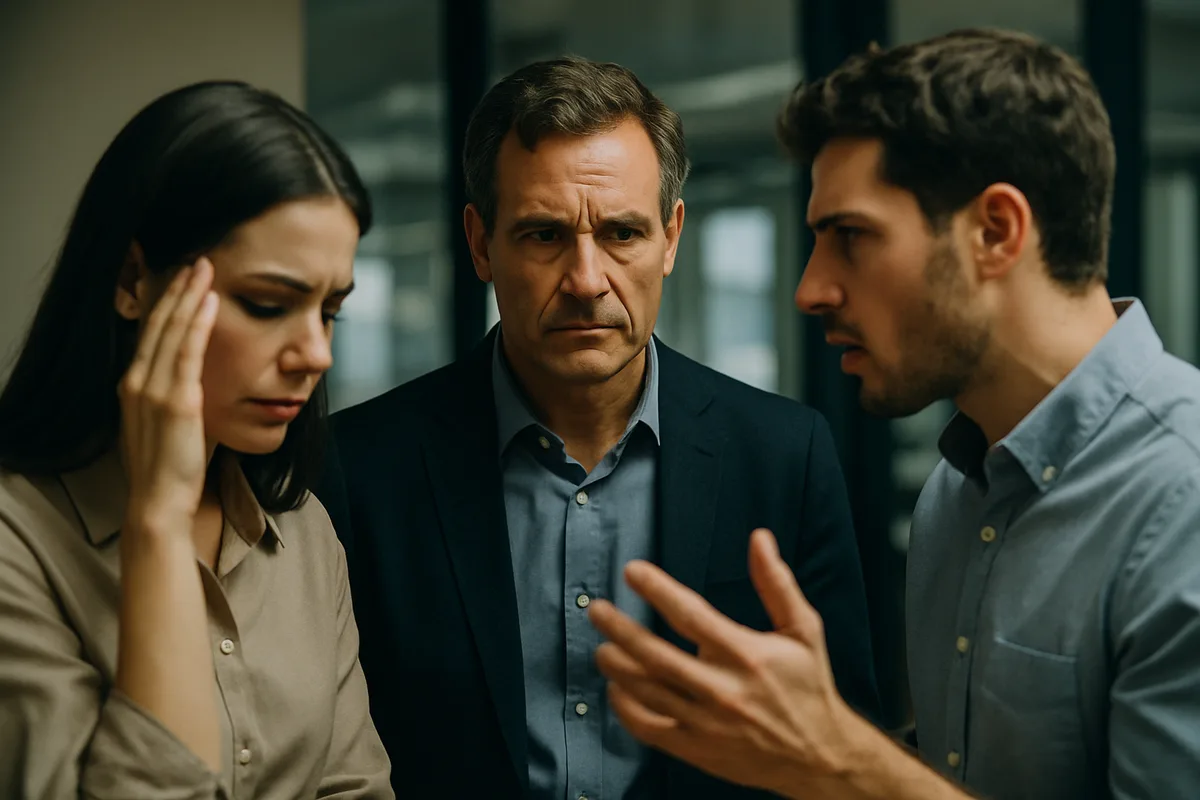
This article explores comprehensive strategies for managing conflict between team members. We’ll delve into understanding the nature of workplace conflicts, recognizing early signs, implementing effective resolution techniques, and creating a positive team culture that minimizes destructive conflicts. Whether you’re dealing with minor disagreements or more serious disputes, this guide will equip you with the tools and insights needed to navigate team conflicts successfully and foster a more cohesive, high-performing team.
Understanding Conflict in the Workplace
Types of Workplace Conflict
Common types of conflict include:
- Task-based conflicts over work processes or goals
- Relationship conflicts stemming from personal differences
- Value conflicts due to different beliefs or ethics
- Resource conflicts over limited assets or opportunities
- Communication conflicts from misunderstandings or poor information sharing
Understanding these types helps in identifying and addressing conflicts effectively.
The Impact of Conflict on Team Performance
Unresolved conflict can lead to:
- Decreased productivity and efficiency
- Low team morale and job satisfaction
- Increased stress and absenteeism
- Poor decision-making and missed opportunities
- Damage to team cohesion and organizational culture
Recognizing these impacts underscores the importance of effective conflict management.
Recognizing Early Signs of Conflict
Behavioral Indicators
Watch for signs such as:
- Increased tension or hostility between team members
- Avoidance or minimal interaction between certain individuals
- Non-verbal cues like eye-rolling or dismissive gestures
- Decreased participation in team activities or discussions
- Forming of cliques or exclusionary behavior
Early recognition allows for timely intervention and resolution.
Communication Breakdowns
Identify communication issues like:
- Increased misunderstandings or misinterpretations
- Reluctance to share information or collaborate
- Passive-aggressive comments or sarcasm
- Raised voices or aggressive tone in discussions
- Lack of constructive feedback or idea sharing
Addressing communication breakdowns is key to preventing escalation of conflicts.
Creating a Conflict-Resolution Framework
Establishing Clear Conflict Resolution Policies
Develop policies that:
- Outline steps for addressing conflicts
- Define acceptable and unacceptable behaviors
- Specify the role of managers and HR in conflict resolution
- Provide guidelines for confidentiality and fairness
- Establish consequences for unresolved or repeated conflicts
Clear policies provide a roadmap for handling conflicts consistently.
Training Team Members in Conflict Resolution Skills
Offer training on:
- Effective communication techniques
- Emotional intelligence and empathy
- Problem-solving and negotiation skills
- Understanding different conflict styles
- De-escalation techniques
Equipping team members with these skills empowers them to resolve conflicts proactively.
The Manager’s Role in Conflict Resolution
Acting as a Neutral Mediator
As a mediator:
- Remain impartial and avoid taking sides
- Create a safe space for open dialogue
- Guide the conversation towards resolution
- Help parties find common ground
- Document agreements and follow-up actions
Effective mediation facilitates constructive conflict resolution.
Fostering Open Communication
Encourage open communication by:
- Modeling transparent and honest communication
- Creating regular opportunities for feedback and discussion
- Addressing issues promptly and directly
- Encouraging team members to express concerns respectfully
- Validating feelings while focusing on solutions
Open communication prevents the buildup of unresolved issues.
Strategies for Addressing Conflict
The GROW Model for Conflict Resolution
Apply the GROW model:
- Goal: Establish the desired outcome of the resolution
- Reality: Assess the current situation objectively
- Options: Explore possible solutions and approaches
- Will: Determine action steps and commitments
This structured approach guides parties towards a mutually beneficial resolution.
Using ‘I’ Statements and Active Listening
Promote effective communication through:
- Encouraging the use of ‘I’ statements to express feelings and needs
- Practicing and modeling active listening skills
- Summarizing and reflecting back to ensure understanding
- Asking open-ended questions to gather more information
- Acknowledging emotions while focusing on facts
These techniques facilitate clearer, more empathetic communication.
Navigating Different Conflict Scenarios
Personality Clashes
Address personality conflicts by:
- Helping team members understand different personality types
- Focusing on shared goals and common ground
- Encouraging appreciation of diverse strengths
- Setting clear expectations for professional behavior
- Facilitating team-building activities to improve relationships
Understanding and respecting differences can turn diversity into a team strength.
Work Style Differences
Manage work style conflicts through:
- Clarifying role expectations and responsibilities
- Encouraging flexibility and compromise in working methods
- Facilitating discussions on preferred communication and collaboration styles
- Aligning individual work styles with project needs
- Promoting appreciation for diverse approaches to problem-solving
Leveraging different work styles can enhance team creativity and productivity.
Promoting a Positive Team Culture
Building Trust and Respect
Foster a trusting environment by:
- Consistently following through on commitments
- Recognizing and appreciating team members’ contributions
- Encouraging open and honest communication
- Addressing breaches of trust promptly and fairly
- Modeling respectful behavior in all interactions
A foundation of trust and respect minimizes destructive conflicts.
Encouraging Collaboration and Appreciation
Promote teamwork through:
- Designing projects that require cross-functional collaboration
- Recognizing and rewarding collaborative efforts
- Implementing peer recognition programs
- Facilitating team-building activities that highlight individual strengths
- Celebrating team successes and milestones together
A collaborative culture fosters positive relationships and reduces conflicts.
Post-Conflict Management
Follow-up and Monitoring
After conflict resolution:
- Schedule regular check-ins with involved parties
- Monitor team dynamics for signs of lingering issues
- Reinforce positive behaviors and improvements
- Address any deviations from agreed-upon solutions promptly
- Adjust strategies if initial resolutions prove ineffective
Consistent follow-up ensures lasting resolution and prevents recurrence.
Learning from Conflict Situations
Extract value from conflicts by:
- Conducting team debriefs to identify lessons learned
- Updating policies or procedures based on insights gained
- Sharing anonymized case studies for team learning
- Encouraging reflection on personal growth through conflict
- Incorporating conflict management into performance discussions
Viewing conflicts as learning opportunities promotes continuous improvement.
Preventing Future Conflicts
Regular Team Building Activities
Implement activities such as:
- Off-site team retreats focused on relationship building
- Regular team lunches or social events
- Cross-training sessions to build empathy and understanding
- Collaborative problem-solving exercises
- Diversity and inclusion workshops
Regular team building strengthens relationships and prevents conflicts.
Addressing Systemic Issues
Tackle root causes of recurring conflicts by:
- Reviewing and optimizing work processes
- Addressing resource allocation issues
- Clarifying roles, responsibilities, and decision-making authority
- Improving organizational communication systems
- Aligning team structure with project needs and individual strengths
Addressing systemic issues prevents many conflicts before they arise.
Conclusion
Managing conflict between team members is a critical skill for any leader. By understanding the nature of workplace conflicts, recognizing early signs, and implementing effective resolution strategies, managers can turn potentially destructive situations into opportunities for growth and improved team dynamics.
Remember that conflict, when managed well, can lead to better decision-making, increased creativity, and stronger team bonds. The key is to create an environment where differences are respected, communication is open, and conflicts are addressed promptly and constructively.
As you implement the strategies outlined in this article, from creating a conflict resolution framework to promoting a positive team culture, keep in mind that every conflict situation is unique. Be prepared to adapt your approach based on the specific individuals involved and the nature of the conflict.
Importantly, your role as a manager extends beyond just resolving conflicts as they arise. By fostering a culture of trust, respect, and open communication, you can prevent many conflicts from escalating in the first place. Regular team building activities, clear policies, and systemic improvements all contribute to a more harmonious work environment.
Remember to lead by example. Your approach to handling disagreements and your willingness to address issues directly will set the tone for how your team manages conflicts. Demonstrate the behaviors you want to see in your team members – active listening, empathy, and a focus on collaborative problem-solving.
Finally, view each conflict as a learning opportunity. After resolution, take time to reflect on what you and your team can learn from the experience. Use these insights to continually improve your conflict management skills and to strengthen your team’s ability to work together effectively.
By mastering the art of conflict management, you not only create a more positive work environment but also build a more resilient, adaptable, and high-performing team. Your efforts in this area will contribute significantly to your team’s success and to your own growth as a leader.
Embrace the challenge of managing team conflicts with confidence and skill. The results – improved team cohesion, enhanced productivity, and a more positive work culture – are well worth the effort.
When to Escalate Conflict to HR or Leadership
Not every conflict can or should be resolved at the manager level. When disputes involve allegations of harassment, discrimination, or potential policy violations, escalating to HR or senior leadership is not just appropriate — it is a professional and legal obligation. Similarly, if a conflict has persisted despite repeated mediation attempts, or if one party feels unsafe or intimidated, bringing in a higher authority helps protect both individuals and the organization.
Timing matters significantly when deciding to escalate. Waiting too long can allow tensions to harden, damage team morale further, or expose the company to liability. A useful benchmark is to escalate whenever the conflict begins to affect performance beyond the immediate parties involved, when formal documentation of incidents becomes necessary, or when a manager has a personal stake in the outcome that could compromise neutrality.
Before escalating, it is good practice to document the history of the conflict, including prior conversations, agreements that were not honored, and any observable impacts on work quality or team dynamics. This documentation gives HR or leadership the context needed to act decisively and fairly. Framing escalation as a structured support mechanism rather than a punitive step also helps preserve trust with all parties involved.
Remote and Hybrid Team Conflict Challenges
Managing conflict between team members becomes considerably more complex when those members are distributed across different locations, time zones, and communication platforms. In remote and hybrid environments, the absence of face-to-face interaction strips away many of the non-verbal cues that help people gauge tone and intent. A message that seems direct in writing may come across as hostile, and because there is no immediate opportunity to clarify, misunderstandings can fester for days before anyone addresses them.
Hybrid arrangements introduce a distinct inequity challenge: team members who are physically present in an office often have informal access to managers and conversations that remote colleagues simply do not. This visibility gap can breed resentment and a perception of favoritism, even when none is intended. Leaders need to be deliberate about ensuring remote employees have equal voice in team discussions, are included in decision-making moments, and feel that their concerns will be heard with the same urgency as those raised in person.
When conflict does arise in distributed teams, choosing the right communication channel for resolution is critical. Text-based channels like email or messaging apps are generally poor venues for sensitive conversations because they lack tone and invite misreading. Wherever possible, conflict resolution conversations should take place over video calls where both parties can see each other, and managers should ensure that each person has adequate time to speak without the technical disruptions that can make virtual dialogue feel adversarial.
Emotional Intelligence in Conflict Management
Emotional intelligence — the capacity to recognize, understand, and regulate one's own emotions while remaining attuned to the emotions of others — is one of the most powerful assets a manager can bring to conflict resolution. Leaders who operate with high emotional intelligence tend to de-escalate tense situations more quickly because they respond to the emotional undercurrent of a dispute rather than just its surface-level facts. This means acknowledging frustration or hurt before moving into problem-solving mode, which signals to each party that they have been genuinely heard.
Self-awareness is the foundation of emotionally intelligent conflict management. A manager who does not recognize their own biases, stress triggers, or preferred conflict styles is likely to let those factors quietly shape their decisions, often to the detriment of one party. Regular reflection, peer feedback, and even structured coaching can help leaders develop the self-knowledge necessary to stay measured and impartial when team tensions run high.
Empathy, another core dimension of emotional intelligence, allows managers to see the conflict from multiple vantage points simultaneously. Rather than immediately assessing who is right or wrong, an empathetic leader asks what each person is experiencing and what unmet need might be driving their behavior. This reframing shifts the dynamic from adversarial to collaborative, opening pathways to resolution that positional bargaining alone rarely achieves.
Conflict Resolution Tools and Software
Technology has expanded the toolkit available to managers and HR professionals who need to manage conflict between team members in a structured, trackable way. Dedicated platforms now exist that support anonymous reporting of workplace concerns, structured mediation workflows, and documentation of resolution agreements. These tools help organizations move beyond ad hoc conflict handling toward a consistent, auditable process that protects both employees and the company.
Beyond specialized software, many teams leverage the collaborative features of project management and communication platforms to reduce the conditions that breed conflict in the first place. Clear task assignment, transparent progress tracking, and shared visibility into priorities can eliminate the ambiguity around roles and workloads that often sits at the root of interpersonal friction. When everyone can see who owns what and what the agreed-upon goals are, there is less room for the assumptions and misaligned expectations that typically escalate into disputes.
Assessment instruments, including personality and conflict-style inventories, also serve as valuable tools when introduced thoughtfully during team development. Helping team members understand their own default responses to disagreement — whether they tend toward avoidance, competition, or collaboration — builds the self-awareness needed to interrupt unproductive patterns. When these insights are shared in a psychologically safe setting, they can transform conflict from a source of division into a shared language the team uses to navigate differences constructively.
Measuring Conflict Resolution Effectiveness
Resolving a conflict in the moment is only part of the challenge; understanding whether the resolution actually held — and whether the team is healthier for it — requires deliberate measurement. Managers can track qualitative indicators such as changes in communication tone, willingness to collaborate across previously divided parties, and the recurrence of similar disputes. Regular one-on-one check-ins following a resolution provide a low-pressure opportunity to assess whether agreements are being honored and whether lingering tensions need additional attention.
At a team level, periodic pulse surveys offer a structured way to gauge psychological safety, trust, and satisfaction with how conflicts are handled. These do not need to be lengthy instruments; even a handful of well-crafted questions asked consistently over time can reveal trends that would otherwise go unnoticed until they become serious problems. Tracking survey results alongside productivity metrics and voluntary turnover data gives leaders a more complete picture of how conflict management practices are affecting overall team health.
For technology leaders especially, treating conflict resolution as a measurable management discipline rather than a one-off event signals a mature, data-informed approach to team performance. When organizations review conflict-related data as part of their regular leadership retrospectives, they create the conditions for continuous improvement — identifying which types of disputes recur, where process breakdowns tend to originate, and which resolution approaches consistently produce lasting outcomes. This institutional learning compounds over time and is a genuine competitive advantage in talent-intensive environments.